
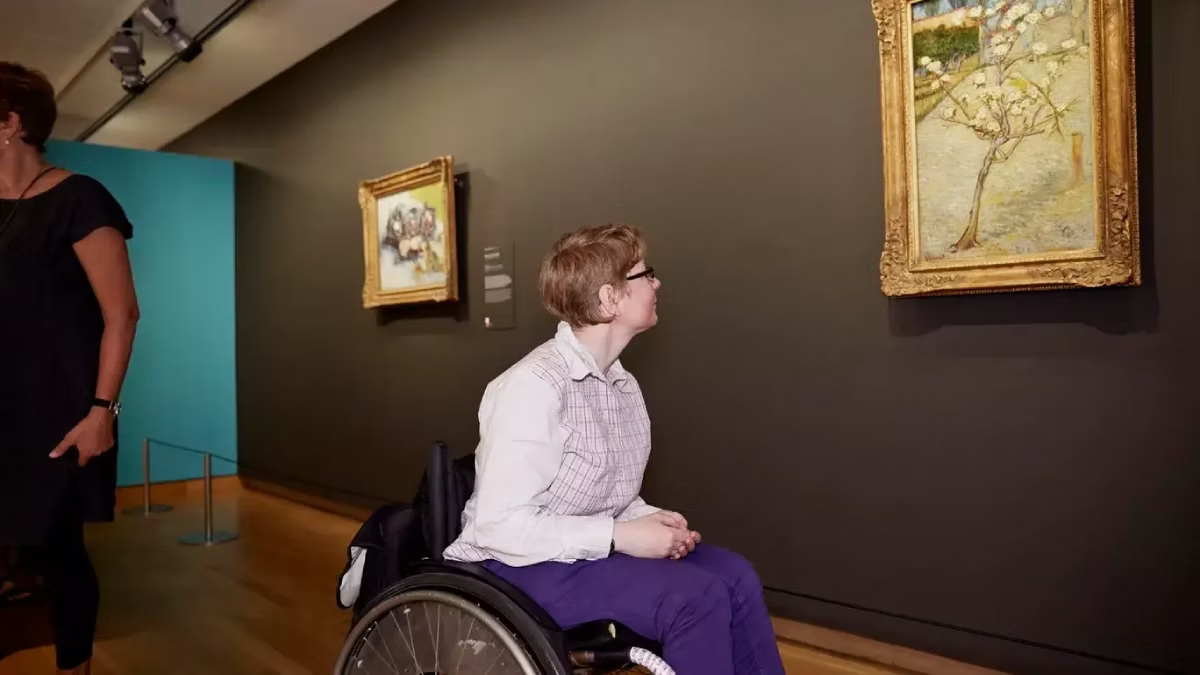
Van Gogh Museum Accessibility Guide

The Van Gogh Museum is fully accessible for visitors with physical disabilities. The building has elevator access to all floors, accessible restrooms on every level, and the museum offers free wheelchair and walker loans at the entrance. Visitors with non-visible disabilities can request additional support by wearing the Sunflower Lanyard, which signals to staff that you may need extra assistance. All visitors, including those with disabilities and free-entry concessions, must book a timed-entry ticket online in advance.
The Van Gogh Museum has invested significantly in accessibility across its buildings — both the original Rietveld building and the connected Kurokawa wing. Whether you use a wheelchair, have a visual impairment, experience sensory sensitivity, or have a non-visible disability, this guide covers what to expect and how to prepare for your visit.
Ticket Booking for Visitors with Disabilities
All visitors must book a timed-entry ticket online in advance — this includes visitors who qualify for free or discounted entry. There are no walk-up tickets at the door. Visitors with disabilities who hold a Museumkaart, ICOM card, or other concession passes must still reserve a timed entry online.
The standard adult ticket costs €25. Visitors who require a personal assistant or carer to accompany them may be eligible for a complimentary carer ticket — it is worth contacting the museum directly before your visit to confirm current policy and arrange this in advance.
Wheelchair Access and Physical Accessibility
The Van Gogh Museum is wheelchair accessible throughout. Key provisions include:
Entrance and building access
The main entrance on Museumplein has step-free access. The entrance doors are wide enough for wheelchair users, and security screening is designed to accommodate mobility aids.
Elevators
Both the Rietveld building and the Kurokawa wing are equipped with elevators providing access to all floors. There are no areas of the permanent collection that are inaccessible to wheelchair users.
Wheelchair and mobility aid loans
The museum offers free wheelchair loans at the entrance. Walkers and canes are also available. These can be collected on arrival — no advance booking is required, but availability is not guaranteed during peak periods. If you rely on a loan wheelchair, arriving early is advisable.
Accessible restrooms
Accessible restrooms are available on multiple floors throughout the museum.
Gallery space
The gallery spaces within the permanent collection are designed with adequate turning radius for wheelchairs. Some temporary exhibition spaces may have tighter configurations — if this is a concern, it is worth checking with the museum ahead of your visit.
Sunflower Lanyard — Support for Non-Visible Disabilities
The Van Gogh Museum participates in the Hidden Disabilities Sunflower Lanyard scheme. Wearing the Sunflower Lanyard is a voluntary, discreet way to signal to museum staff that you have a hidden disability — such as autism, ADHD, chronic pain, anxiety, hearing loss, or any condition that is not immediately visible — and that you may need additional support or patience during your visit.
Staff are trained to recognise the lanyard and to offer appropriate assistance without requiring you to explain your condition. Sunflower Lanyards can often be collected at the museum entrance, or brought from home if you already have one.
Sensory-Friendly Visits
The Van Gogh Museum can be an intense sensory environment, particularly during peak visiting hours when the galleries are crowded and noisy. For visitors with sensory sensitivity — including those on the autism spectrum, those with anxiety conditions, or those who find busy, loud environments difficult — the following strategies help:
- Visit during the quietest periods. Early morning slots (9:00 AM to 11:00 AM) on weekdays, or Friday evenings after 5:00 PM, are the least crowded times. Lower visitor density means lower noise levels and more personal space in the galleries. See our best time to visit guide for full timing guidance.
- Use the cloakroom to reduce sensory load. Leaving coats, bags, and unnecessary items in the free cloakroom reduces physical discomfort and lets you move through the galleries more freely.
- The audio guide works well for sensory-sensitive visitors. Rather than reading busy wall text in crowded galleries, the audio guide allows you to focus on the painting in front of you with spoken commentary through headphones, reducing the need to process competing visual and textual information simultaneously.
- Wear the Sunflower Lanyard if needed. Museum staff will offer additional support and patience if you are wearing the lanyard.
Visual Impairment
The museum’s audio guide is available in 12 languages and provides detailed verbal descriptions of the major works in the collection. For visitors with significant visual impairment, the audio guide is the primary accessibility tool for engaging with the collection. The museum’s interpretive panels use a readable font size, and the lighting in the galleries is designed to minimise glare.
For visitors with low vision rather than full blindness, the museum’s layout is clear and well-signed with good contrast between surfaces. Staff are available throughout the galleries to assist with orientation.
Hearing Impairment
The Van Gogh Museum does not currently offer a dedicated British Sign Language or Dutch Sign Language tour as a standard offering, though group tours can sometimes be arranged for Deaf visitors through prior arrangement with the museum. The museum’s written interpretive content is comprehensive, and the collection is experienced primarily visually, which means hearing-impaired visitors can engage fully with the artworks independently.
The audio guide is not accessible to visitors with severe hearing impairment without assistive listening devices — it is worth checking with the museum in advance whether induction loop facilities are available.
Getting to the Museum with Accessibility Needs
By public transport
Amsterdam trams are accessible, with low-floor boarding on most routes. Trams 2, 5, and 12 stop at Van Baerlestraat, the closest stop to the museum. GVB’s accessibility information confirms wheelchair-accessible vehicles on these routes, though not every tram on every route is low-floor — allow extra time if you need a low-floor vehicle.
By car
The nearest accessible parking is at Q-Park Museumplein on Van Baerlestraat. Blue Badge holders may also use designated on-street disabled parking spaces near the museum, subject to availability.
Taxi and ride-share
Taxi and ride-share services that accommodate wheelchairs and mobility aids are available in Amsterdam. Booking in advance through an accessible taxi service is recommended rather than hailing on the street.
For full transport options including tram routes and directions, see our guide to getting to the Van Gogh Museum.
Accessibility Summary
| Feature | Available |
|---|---|
| Step-free entrance | Yes |
| Elevator to all floors | Yes |
| Wheelchair loan (free) | Yes |
| Walker/cane loan (free) | Yes |
| Accessible restrooms | Yes |
| Sunflower Lanyard scheme | Yes |
| Audio guide | Yes (12 languages) |
| Accessible parking nearby | Yes (Q-Park, Blue Badge) |
| Strollers/pushchairs in galleries | No (cloakroom only) |
Frequently Asked Questions
Is the Van Gogh Museum wheelchair accessible?
Yes. The museum has step-free entrance, elevators to all floors, accessible restrooms, and free wheelchair loans at the entrance.
Can I borrow a wheelchair at the Van Gogh Museum?
Yes. Free wheelchairs are available to borrow at the entrance on a first-come basis. Arriving early is advisable if you depend on this service.
What is the Sunflower Lanyard at the Van Gogh Museum?
The Sunflower Lanyard is a scheme for visitors with hidden or non-visible disabilities. Wearing it signals to museum staff that you may need additional support without having to explain your condition. Staff are trained to recognise and respond to it.
Does the Van Gogh Museum offer sensory-friendly sessions?
The museum does not have dedicated sensory sessions, but visiting during the quietest periods — early weekday mornings or Friday evenings — significantly reduces sensory load. Wearing a Sunflower Lanyard also helps staff provide appropriate support.
Do I need to book a ticket if I have a disability?
Yes. All visitors, including those with disabilities or free-entry concessions, must book a timed-entry ticket online in advance. There are no walk-up tickets available at the door.
Is there disabled parking at the Van Gogh Museum?
The nearest car park is Q-Park Museumplein on Van Baerlestraat. On-street disabled parking spaces (Blue Badge) are available near the museum subject to availability.
