
Van Gogh Museum Audio Guide — Is It Worth It?

The Van Gogh Museum audio guide is a multimedia guide available in 12 languages that covers both the permanent collection and temporary exhibitions. It costs approximately €5–€7 when added to your entry ticket at the time of booking. For first-time visitors who want context around Van Gogh’s technique, biography, and the significance of individual works, it is genuinely worth the addition. Visitors who prefer to move at their own pace without narration, or who have already read extensively about Van Gogh, can comfortably skip it — the museum’s wall labels and interpretive panels provide solid context on their own.
The Van Gogh Museum’s audio guide occupies a middle ground that many attraction audio guides do not reach: it is substantive enough to add real value, concise enough not to slow your progress through the galleries, and well-produced enough that most visitors who use it are glad they did. Whether it is worth adding to your ticket depends primarily on your visiting style and what you already know about Van Gogh. This review covers everything you need to decide.
What the Audio Guide Covers
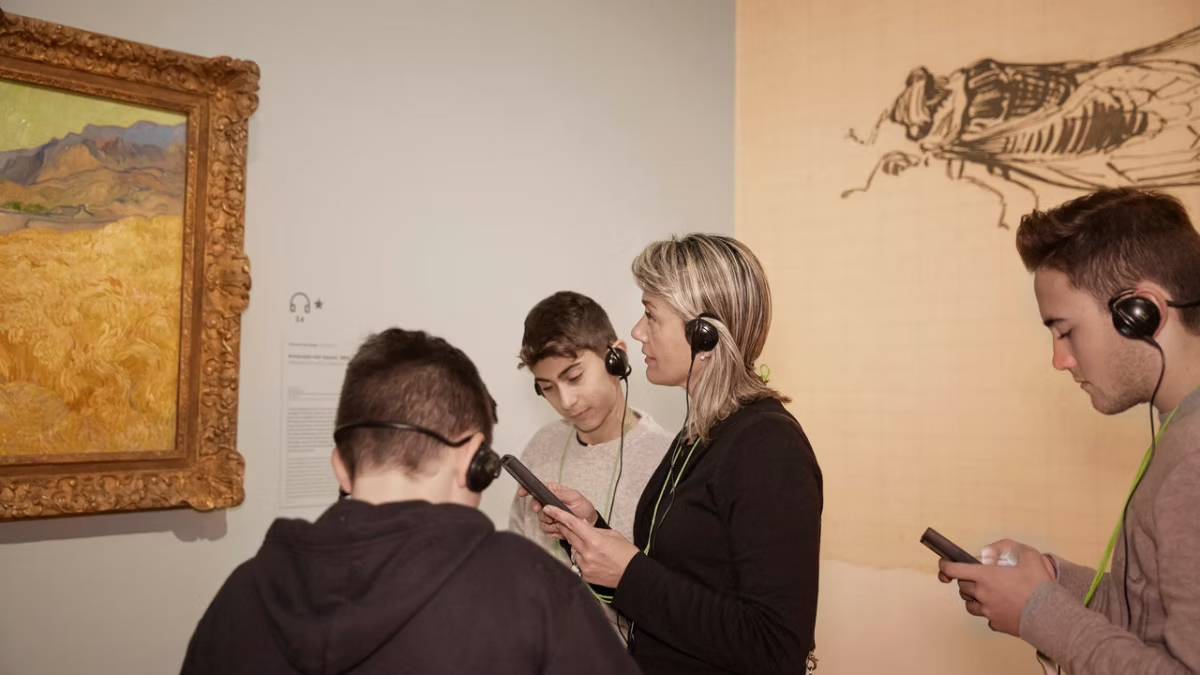
The Van Gogh Museum audio guide is a multimedia device — not just audio narration. It includes:
- Audio commentary on the major works in the permanent collection, delivered chronologically as you move through the floors
- Visual close-ups of painting details on the device screen, highlighting brushwork, compositional elements, and colour relationships that are difficult to see from a normal viewing distance
- Biographical context linking individual works to events in Van Gogh’s life and correspondence
- Coverage of temporary exhibitions — the guide adapts to include content about whatever special exhibition is running during your visit
The guide is available in 12 languages: Dutch, English, French, German, Spanish, Italian, Portuguese, Russian, Japanese, Korean, Chinese (Mandarin), and Arabic.
It is collected at the entrance on a dedicated multimedia device — visitors do not use their own phones for the guide. Earphones are provided.
How Much Does the Audio Guide Cost?
The audio guide is priced at approximately €5–€7 when added to an entry ticket at the time of booking. The exact price varies slightly by booking channel and may be updated by the museum.
For children aged 0–12, the audio guide is available free of charge if requested at the museum entrance — it is not recommended for very young children by the museum, but it can be collected without charge.
Adding the audio guide at the time of booking is simpler than collecting it at the entrance on the day. If you are undecided, note that the guide cannot be added after you have already purchased your entry-only ticket in most cases — you would need to request it at the entrance desk and pay there.
The Case For Getting the Audio Guide
You are visiting for the first time
First-time visitors consistently report that the audio guide transforms the experience from “looking at paintings” into “understanding a life’s work.” The guide provides the biographical thread that connects the dark early period in the Netherlands to the luminous works from Arles — a connection that is visible in the paintings but only fully legible if you know what happened in between.
You want to understand Van Gogh’s technique
The screen component of the multimedia guide is particularly valuable for visitors interested in how Van Gogh worked. Close-up views of brushwork in Sunflowers, the swirling impasto of the Arles period, and the restrained linework of the early drawings are not easily seen from gallery distance. The guide effectively gives you a magnifying glass alongside the narration.
You are visiting without a guided tour
If you have opted for a self-guided visit rather than a guided tour, the audio guide is the most practical way to add expert commentary to your experience. It is considerably cheaper than a guided tour and allows you to move at your own pace. For a comparison of guided tour options, see our guided tours guide.
You are visiting with a partner or friend who has different viewing speeds
The audio guide is individual — each visitor uses their own device at their own pace. This is actually an advantage for pairs who tend to move through galleries at different speeds. Each person can engage with the commentary at their own tempo without needing to synchronise.
You are interested in the letters
The audio guide includes content drawn from Van Gogh’s letters to Theo and to other correspondents, read in context alongside the works they describe. For visitors who find the letters display compelling, the guide deepens this dimension of the visit significantly.
The Case Against Getting the Audio Guide
You have already read extensively about Van Gogh
Visitors with a strong existing knowledge of Van Gogh’s biography and artistic development will find the audio guide covers familiar ground. If you have already read a biography, spent time with the letters, or have an art-historical background in Post-Impressionism, the guide adds less marginal value.
You prefer to look without narration
Some visitors find audio narration creates a structured experience that conflicts with their preferred way of looking at art — lingering on what catches their eye, returning to works multiple times, or simply sitting with a painting in silence. If this describes your approach, the audio guide’s sequential structure may feel constraining rather than helpful.
You are on a very short visit
If you are planning 60 minutes or less in the museum and want to see the highlights quickly, the audio guide can slow your pace. The guide is designed for a 90-minute to 2-hour visit — using it during a rushed visit means you will either leave commentary unheard or linger longer than intended.
You are visiting with young children
For families with children under 8, managing a multimedia device while supervising children adds a logistical burden that generally outweighs the guide’s value. The museum’s family activity sheets are a more practical alternative for this group. For children aged 0–12, the guide is available free — so the question is practicality rather than cost. See our Van Gogh Museum with kids guide for family visit advice.
Audio Guide vs Guided Tour — Which Is Better?
The audio guide and a guided tour serve different purposes and suit different visitors.
| Audio Guide | Guided Tour (small group) | |
|---|---|---|
| Price | ~€5–7 add-on | From ~€35–45 per person |
| Pace | Your own | Group-paced |
| Depth | Good | Excellent |
| Interaction | None | Q&A with guide |
| Languages | 12 | Varies by tour |
| Group size | Individual | Up to 8 (small-group) |
| Best for | Solo / pairs, any knowledge level | First-timers wanting maximum depth |
The audio guide is the right choice for visitors who want added context at a low additional cost while retaining full flexibility over their pace. A guided tour is the right choice for visitors who want the deepest possible engagement with the collection and are comfortable with a structured, group-paced experience.
For the best available guided tour options, see our guided tours overview or book directly:
Book This TourPrivate Guided Tour of the Van Gogh Museum
Book This TourHow to Add the Audio Guide to Your Ticket
The audio guide can be added at the time of booking on the following authorised platforms:
- The official Van Gogh Museum website (tickets.vangoghmuseum.com) — select the audio guide add-on at checkout
- An authorised booking platform — available as an upgrade option when selecting your ticket type Buy This Ticket
If you have already purchased an entry-only ticket without the audio guide, you can request and pay for the guide at the entrance desk on the day, subject to availability.
Verdict
The Van Gogh Museum audio guide is worth buying for most first-time visitors, particularly those without a strong prior knowledge of Van Gogh’s life and work. At €5–€7, it represents good value for the context it provides. The multimedia screen component — with close-up views of painting details — is the most distinctive feature and genuinely adds something that gallery viewing alone cannot replicate.
It is not essential. The museum’s interpretive panels and wall labels are well-written and informative. Visitors who prefer an unstructured experience, who already know Van Gogh’s story well, or who are booking a guided tour instead will not miss it.
For a self-guided first visit, add it. For a repeat visit or a guided tour, skip it.
Frequently Asked Questions
How much does the Van Gogh Museum audio guide cost?
Approximately €5–€7 when added at the time of booking. It is free for children aged 0–12 when requested at the entrance.
In which languages is the audio guide available?
The guide is available in 12 languages: Dutch, English, French, German, Spanish, Italian, Portuguese, Russian, Japanese, Korean, Chinese (Mandarin), and Arabic.
Can I use my phone as the audio guide?
No. The Van Gogh Museum audio guide runs on a dedicated multimedia device provided by the museum. It is not a phone app. Earphones are provided with the device.
Can I add the audio guide after I have already bought my ticket?
In most cases, you cannot add it retrospectively to an existing booking. You can request and pay for it at the entrance desk on the day of your visit, subject to availability.
Is the audio guide included in the entry ticket price?
No. The audio guide is an optional add-on priced at approximately €5–€7. It is not included in the standard €25 adult ticket.
Is the audio guide worth it for children?
For children aged 8 and above with an interest in the subject, it can be worthwhile. For younger children, the museum’s free family activity sheets are a more practical option. The audio guide is free for children aged 0–12 if requested at the entrance.
